Introduction
“Which round are you raising?” is a question that stops a lot of first-time founders cold. Startup funding stages aren’t just fancy labels — each one comes with different expectations, investor types, and valuation logic. If you’re building something and hoping to raise money in 2026, understanding this ladder before you climb it will save you from awkward investor meetings and, frankly, from underselling your company.
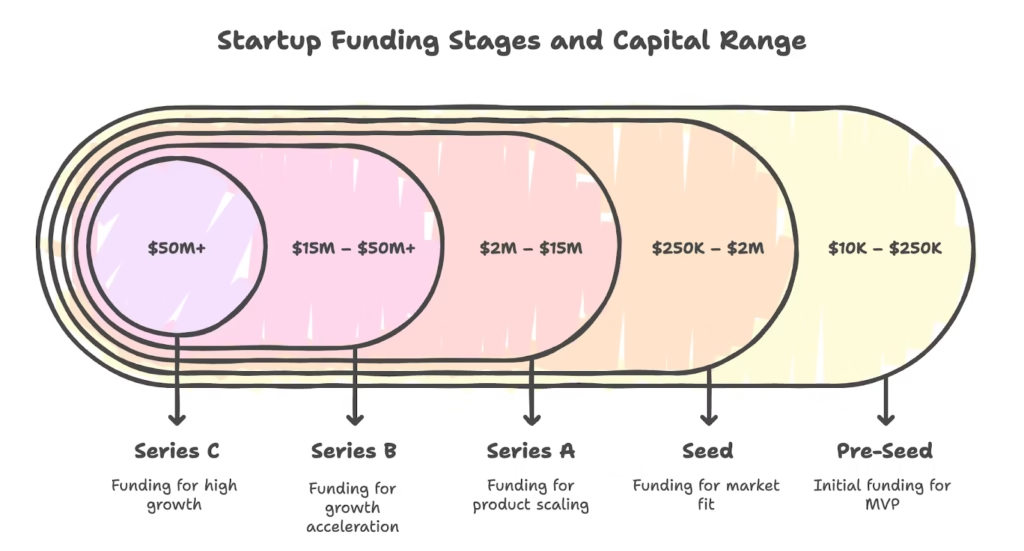
Pre-Seed — Building the Foundation
This is the “prove the idea isn’t crazy” stage. Usually funded by your own savings, friends, family, or occasionally an angel investor who believes in you more than the product.
At the pre-seed stage of startup funding, founders typically raise between ₹20 lakh to ₹1 crore to build an MVP and validate the problem — investors here are betting on the team, not the traction.
There’s no revenue expected yet. Just a working prototype and a decent story.
Seed Round — First Real Validation
Now you’ve got some early users, maybe some revenue, and a clearer sense of your market. Seed rounds usually come from angel networks, seed funds, or early-stage VCs.
I’ve noticed Indian seed rounds have grown more competitive lately — investors want at least some retention data, not just a pitch deck full of promises.
Typical Seed Round Numbers
- Amount raised: ₹1-8 crore roughly
- Valuation: ₹8-40 crore range, varies wildly by sector
- Investor type: Seed funds, angel syndicates, accelerators like Y Combinator or Sequoia’s Surge
Series A — Prove the Model Works
Series A is where things get serious. You need actual metrics — customer acquisition cost, retention, unit economics — not just a good story anymore.
Series A funding requires startups to show a repeatable, scalable business model with real revenue traction, and rounds typically range from ₹15-60 crore depending on the sector.
This round often decides whether a startup becomes a “real company” or stays a side project forever.
Series B — Scaling What Works
By Series B, you’re not proving the model anymore — you’re scaling it. Hiring picks up. Marketing spend increases. Expansion into new cities or markets becomes the priority.
Investors at this stage are usually larger VC firms writing bigger checks, often ₹50 crore to ₹200 crore plus.
Series C and Beyond — Aggressive Growth or Exit Prep
Series C rounds are for companies looking to dominate their market, acquire competitors, or prepare for an eventual IPO. Late-stage investors, private equity firms, and sometimes sovereign wealth funds get involved here.
[link to related guide about startup mistakes to avoid here]
Bridge Rounds — The Awkward In-Between
Not every round fits neatly into a letter. Bridge rounds happen when a startup needs cash between two major rounds — often to extend runway or hit a milestone that’ll help the next big raise.
These aren’t a sign of failure, despite what some people assume. Plenty of solid startups take bridge funding as a strategic move, not a desperate one.
How to Know Which Stage You’re Actually At
Don’t just go by how much money you need. Match your stage to your traction:
- No product yet → Pre-seed
- Working product, early users → Seed
- Proven repeatable revenue → Series A
- Scaling across markets → Series B
- Market dominance push → Series C+
[link to related guide about business ideas for beginners here]
FAQ
What’s the difference between seed funding and Series A? Seed funding validates the idea with early users; Series A requires proven, repeatable revenue and a scalable business model.
How much equity do founders usually give up at seed stage? Typically 10-20%, though this varies based on valuation and investor negotiation.
Do all startups need to raise Series B and C? No. Many profitable startups stay bootstrapped or stop after Series A if they don’t need aggressive scaling capital.
What is a unicorn in startup funding terms? A privately held startup valued at over $1 billion, usually reached around Series C or D funding.
Can a startup skip seed funding and go straight to Series A? It’s rare but possible if the founders have a strong track record or the product already shows serious traction from day one.
Conclusion
Startup funding stages aren’t just about chasing bigger numbers — each round represents a different level of proof you need to show investors. Know where you actually stand before pitching, because raising the wrong round at the wrong time can hurt your valuation more than help it. Figure out your real stage first, then go raise accordingly.
Suggested image alt text: “startup funding stages chart pre-seed to series c”; “founder pitching investors during seed round meeting”