Introduction
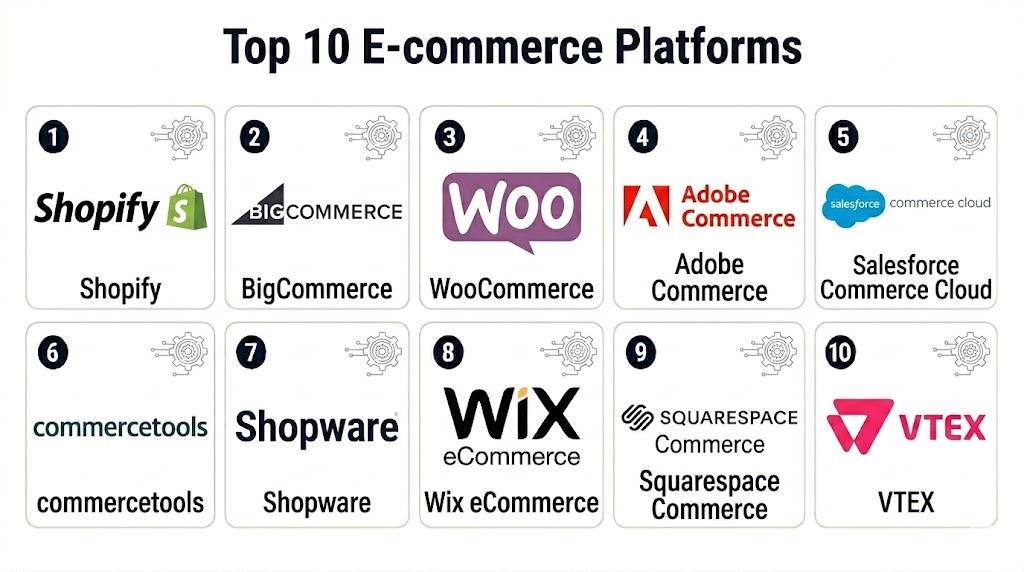
Choosing where to build your online store feels overwhelming with so many options shouting for attention. This comparison of the best ecommerce platforms cuts through the marketing noise and looks honestly at what actually fits different business situations in 2026 — because the “best” platform genuinely depends on your specific needs, not a single universal answer.
Shopify — Best for Ease of Use
Shopify remains a favorite for sellers who want a working store without dealing with technical setup themselves.
Among the best ecommerce platforms, Shopify stands out for beginners due to its straightforward setup, extensive app ecosystem, and reliable hosting — though monthly fees and transaction costs add up as your store scales.
I’ve noticed small business owners without technical backgrounds get a working store live within days on Shopify, compared to weeks of setup frustration with more flexible but complex alternatives.
Shopify’s Downsides Worth Knowing
Customization beyond basic themes often requires hiring developers, and transaction fees can eat into margins for lower-priced products specifically.
WooCommerce — Best for Flexibility
Built on WordPress, WooCommerce offers deep customization for those willing to handle a bit more technical setup.
- Free core plugin, though hosting and premium extensions cost extra
- Massive flexibility through thousands of available plugins
- Requires more technical maintenance than fully hosted platforms like Shopify
This suits businesses with existing WordPress websites or specific customization needs that Shopify’s more restricted structure can’t accommodate easily.
Amazon and Flipkart — Best for Built-In Traffic
Marketplaces solve the “how do I get customers” problem instantly, since millions of shoppers already browse these platforms daily.
- No need to drive your own traffic from scratch
- Trust factor already established through the platform’s own reputation
- Higher competition and marketplace fees eat into margins significantly
For sellers prioritizing quick access to existing customer traffic, marketplaces like Amazon and Flipkart rank among the best ecommerce platforms despite charging higher commission fees than self-hosted alternatives.
[link to related guide about how to start an ecommerce business here]
Meesho — Best for Low-Cost Reselling
Particularly popular in India for social commerce and reselling models with minimal upfront investment.
Picture a homemaker starting to resell clothing through Meesho with zero inventory investment, using the platform’s existing supplier network and simply focusing on marketing to her own social circle.
Instagram and WhatsApp Business — Best for Social-First Selling
For businesses built primarily around social media presence, direct selling through Instagram catalogs and WhatsApp Business often works better than a traditional website initially.
- Lower technical barrier to entry
- Direct, personal customer relationships
- Limited scalability compared to dedicated ecommerce platforms as order volume grows
[link to related guide about social media marketing strategy here]
BigCommerce — Best for Growing Mid-Size Businesses
Less commonly discussed than Shopify but genuinely competitive for businesses outgrowing basic platforms, offering stronger built-in features without needing as many paid add-ons.
Choosing Based on Your Actual Stage
The best ecommerce platform genuinely depends on your business stage — new sellers testing demand often benefit from low-cost social selling, while established brands with consistent volume benefit more from dedicated platforms like Shopify or WooCommerce.
FAQ
Which ecommerce platform is cheapest to start with? Instagram and WhatsApp Business selling requires essentially no platform fees, making them the cheapest entry point for testing products.
Is Shopify better than WooCommerce for beginners? Generally yes for non-technical users, since Shopify handles hosting and technical maintenance that WooCommerce requires you to manage yourself.
Should I sell on marketplaces or build my own website? Marketplaces offer faster access to existing traffic; your own website offers better margins and control but requires driving your own traffic.
Can I use multiple ecommerce platforms simultaneously? Yes, many successful sellers use a combination — a marketplace for traffic and their own website for better long-term margins and customer relationships.
Which platform is best for scaling a growing ecommerce business? Shopify or BigCommerce generally handle scaling well, offering more built-in features and reliability as order volume increases significantly.
Conclusion
There’s no single “best” among these ecommerce platforms — the right choice depends entirely on your budget, technical comfort, and business stage right now. Start where it’s easiest to test demand, then migrate to more robust platforms as your order volume genuinely justifies the investment. Which platform matches where your business actually stands today?
Suggested image alt text: “comparison of ecommerce platforms dashboard screens”; “online seller choosing ecommerce platform for store”